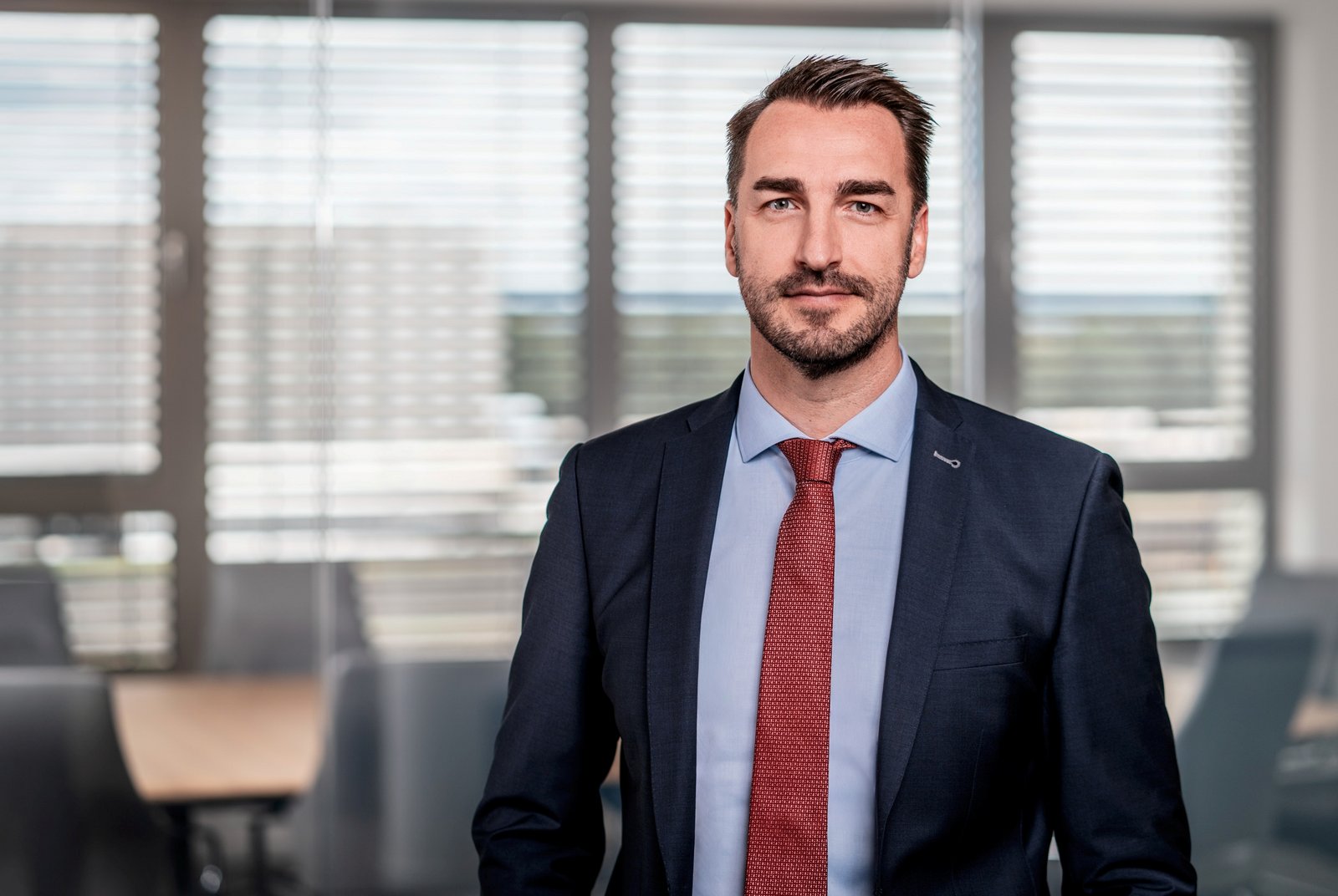

Christian Lorenz
Press Officer
Telephone 0221 / 390 11 90
E-mail lorenzc(at)hgk.de
Häfen und Güterverkehr Köln AG
Press Office
Am Niehler Hafen 2
50735 Cologne


13.08.2026 | Press Release
In view of the current low water levels on the Rhine, HGK Shipping, one of Europe’s leading inland waterway shipping companies, is calling for a long-term fleet renewal programme for inland freight shipping. The aim should be to mobilise investment in up to 1,000 modern, low-water-optimised, energy-efficient and sustainable inland cargo vessels in Europe by 2035, whilst at the same time strengthening European shipbuilding capacity. The German Government should take a leading role in this and stimulate private investment in fleet renewal by providing a reliable, long-term funding framework.
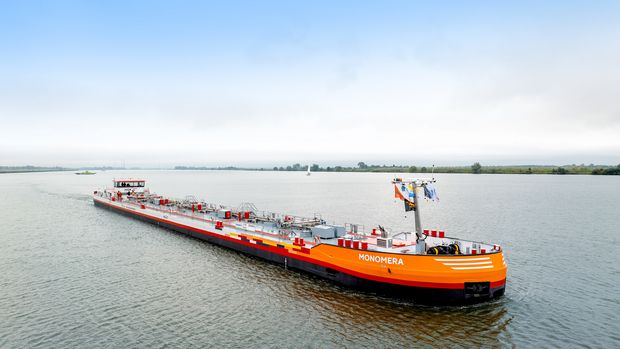
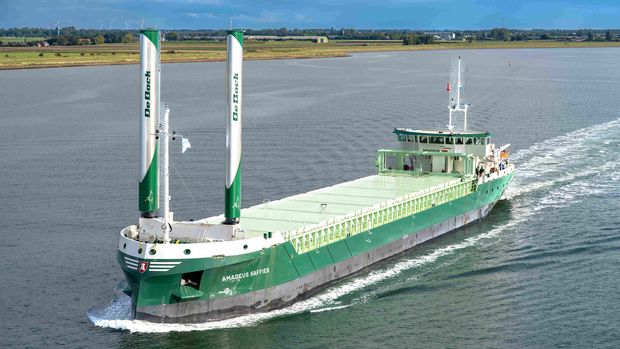
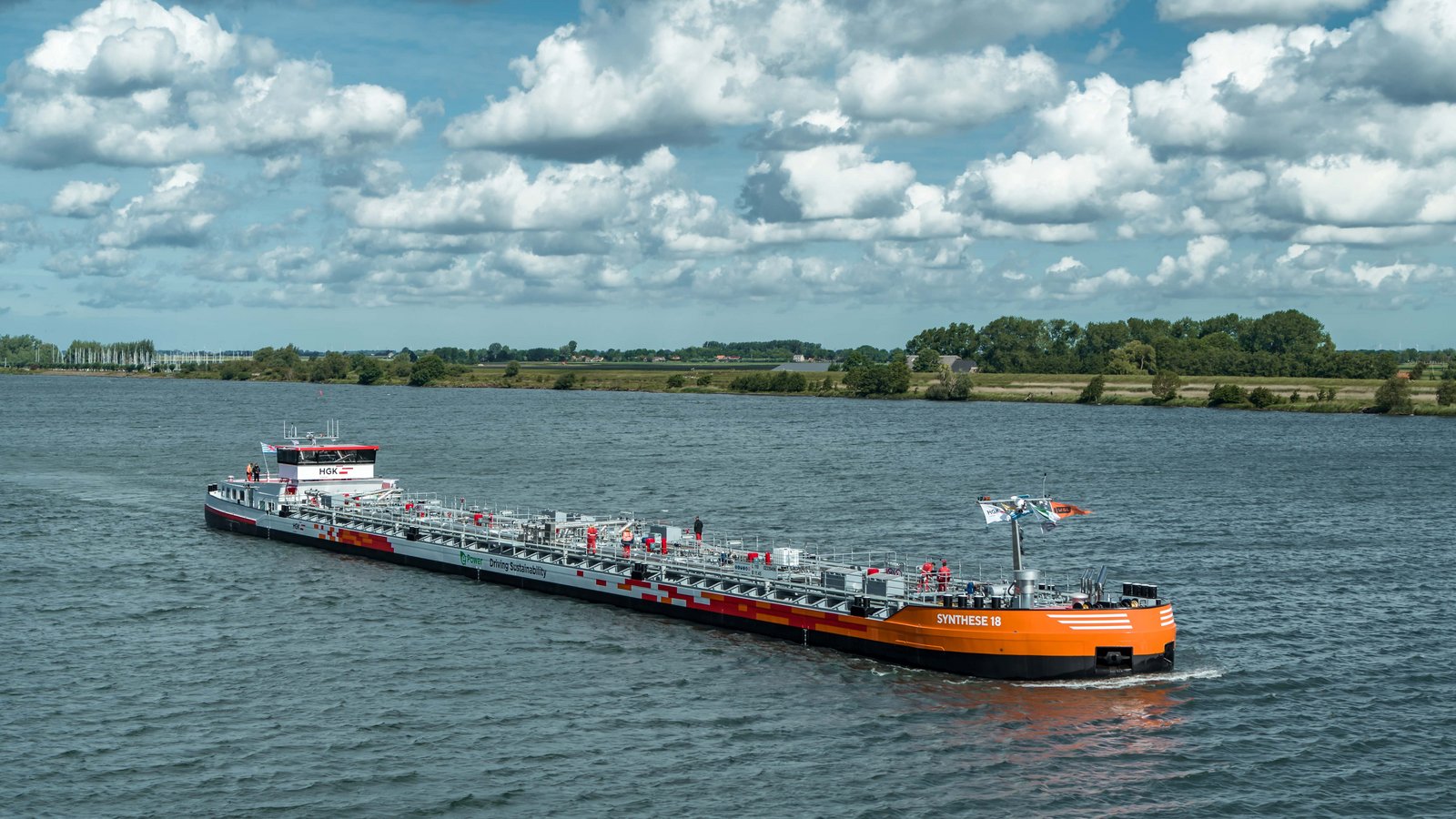
The Middle Rhine currently illustrates just how great a challenge this is: on 11 August, the water level at Kaub was measured at just 16 centimetres. Forecasts point to a further deterioration of the situation and water levels in single figures. As water levels fall, the potential cargo volumes and thus transport capacities on one of Europe’s most important transport routes are reduced massively. Ships optimised for low water levels make all the difference. The nine low-water-optimised vessels, developed since 2018 in collaboration with customers at HGK’s in-house Shipping Design Centre and currently in operation, serve as key references for further projects:
“We are currently seeing what a more modern fleet is capable of: our ‘Synthese 18’ is still transporting 485 tonnes of cargo even under the current extreme conditions at the Kaub gauge. Imagine if we had such capabilities not just on individual vessels, but across relevant parts of the European fleet. That is precisely what our call for up to 1,000 modern vessels is all about: keeping industrial supply chains operational for longer, even during periods of extreme low water levels,” says Steffen Bauer, CEO of the HGK Group.
The current low water levels on the Rhine in 2026 are likely to put a noticeable brake on German economic growth. Estimates currently suggest a reduction in GDP growth of roughly 0.3 to 0.4 percentage points, provided the extreme low-water phase persists. The Kiel Institute for the World Economy estimates the potential economic damage caused by the current low water levels in the third quarter at up to 2 billion euros.
There is also a need for action in structural terms. According to figures from the Central Commission for Navigation on the Rhine (ZKR), the Rhine states’ dry and liquid cargo fleet comprises around 7,800 vessels. Around 80 per cent of the dry cargo fleet was built in the 20th century. At the same time, in 2024, only 13 new dry cargo vessels and 38 new tankers entered the market.
Added to this is the sector’s small- and medium-sized enterprise structure. Alongside larger shipping companies, a significant proportion of the fleet is operated by small and medium-sized enterprises as well as independent shipowners – so-called ‘Partikuläre’. The high investment costs and long payback periods associated with modern newbuilds represent a significant hurdle, particularly for these companies.
“We cannot prevent low water levels. But we can build ships that remain operational for longer under difficult conditions. If we want to modernise the fleet, we must enable small and medium-sized enterprises and individual shipowners in particular to invest in the next generation of vessels,” says Steffen Bauer.
At HGK Shipping, they are convinced that a modern fleet must be resilient, efficient and ‘Future Fuel Ready’ – in other words, open to future climate-friendly propulsion systems and energy sources. At the same time, innovative vessel designs must enable shipowners to tap into new markets: for example, for recycled and circular economy goods, alternative energy sources, project cargo and heavy lift cargo, as well as high-value industrial goods. This creates additional potential for shifting freight transport to waterways.
From the HGK’s perspective, there is a need for a long-term, reliable and adequately resourced funding framework that, in particular, enables small and medium-sized enterprises (SMEs) and private individuals to invest in modern new-build properties. Funding rates of up to 40 per cent should be examined and utilised to the full extent permitted under state aid law.
“Modernising the fleet is a European task – but Germany must lead the way. We need the Federal Government to provide a reliable investment framework up to 2035 that mobilises private capital and gives companies planning certainty for newbuilds. In doing so, we will strengthen the resilience of our supply chains whilst also boosting industrial value creation and shipbuilding expertise in Europe,” says Steffen Bauer.
The HGK therefore calls on the Federal Government to further develop the existing funding instruments into a long-term, reliable investment framework up to 2035. The current federal programme for green inland waterway transport, initially worth 125 million euros, provides an important basis for this, but neglects the necessary adaptations to sustainable low-water periods. What is crucial now is a long-term perspective that extends beyond individual funding periods and legislative terms.
The current low water levels on the Rhine in 2026 are likely to put a noticeable brake on German economic growth. Estimates currently suggest a reduction in GDP growth of roughly 0.3 to 0.4 percentage points, provided the period of extremely low water levels persists. The Kiel Institute for the World Economy estimates the potential economic damage caused by the current low water levels in the third quarter at up to 2 billion euros.
There is also a need for action on a structural level. According to figures from the Central Commission for Navigation on the Rhine (ZKR), the dry and liquid cargo fleet of the Rhine states comprises around 7,800 vessels. Around 80 per cent of the dry cargo fleet was built in the 20th century. At the same time, in 2024, only 13 new dry cargo vessels and 38 new tankers entered the market.
Added to this is the sector’s structure, which is dominated by small and medium-sized enterprises. Alongside larger shipping companies, a significant proportion of the fleet is operated by small and medium-sized enterprises as well as independent shipowners – known as ‘particulars’. The high investment costs and long payback periods associated with modern newbuilds pose a considerable hurdle, particularly for these companies.
“We cannot prevent low water levels. But we can build ships that remain operational for longer under difficult conditions. If we want to modernise the fleet, we must enable small and medium-sized enterprises and individual shipowners in particular to invest in the next generation of ships,” says Steffen Bauer.
At HGK Shipping, they are convinced that a modern fleet must be resilient, efficient and ‘Future Fuel Ready’ – in other words, open to future climate-friendly propulsion systems and energy sources. At the same time, innovative ship designs must enable shipowners to tap into new markets: for example, for recycling and circular economy goods, alternative energy sources, project cargo and heavy lift, as well as high-value industrial goods. This creates additional potential for shifting freight transport onto waterways.
The HGK is therefore proposing a long-term ‘Inland Freight Shipping Fleet Renewal Programme 2035’. The aim should be to mobilise investment in up to 1,000 modern inland freight vessels in Europe by 2035. Such a programme would simultaneously create demand for modern vessels and help to safeguard and further develop European shipbuilding capacity and technological expertise. If, for illustrative purposes, we assume an average investment of 12.5 million euros per new vessel, the target figure corresponds to an investment potential of up to 12.5 billion euros.
A fleet renewal programme is no substitute for the necessary investment in Germany’s inland waterways. Optimising unloading operations on the Middle Rhine, improving unloading facilities and stabilising the riverbed on the Lower Rhine, as well as eliminating further infrastructure bottlenecks, remain just as essential.
“Such a programme would send a strong signal to German industry about the country’s status as a business location. Companies along the Rhine corridor, in particular, must be able to rely on their supply chains functioning even under more difficult conditions. Anyone who invests in a resilient waterway and a modern fleet is therefore investing directly in the future viability of Germany as an industrial location,” said Steffen Bauer. “We expressly welcome the Federal Government’s initiative to involve environmental organisations in the planning of the necessary measures.”
Press Officer
Telephone 0221 / 390 11 90
E-mail lorenzc(at)hgk.de
Häfen und Güterverkehr Köln AG
Press Office
Am Niehler Hafen 2
50735 Cologne
We use cookies on our website. Some of them are essential to ensure functionality, while others help us to continuously improve our online offering. You can find more detailed information in our privacy policy and on our cookie page (see footer). You can also edit your settings there yourself at any time.
Here you can select or disable different categories of cookies on this website. By clicking on the info icon you can learn more about the different cookies.